
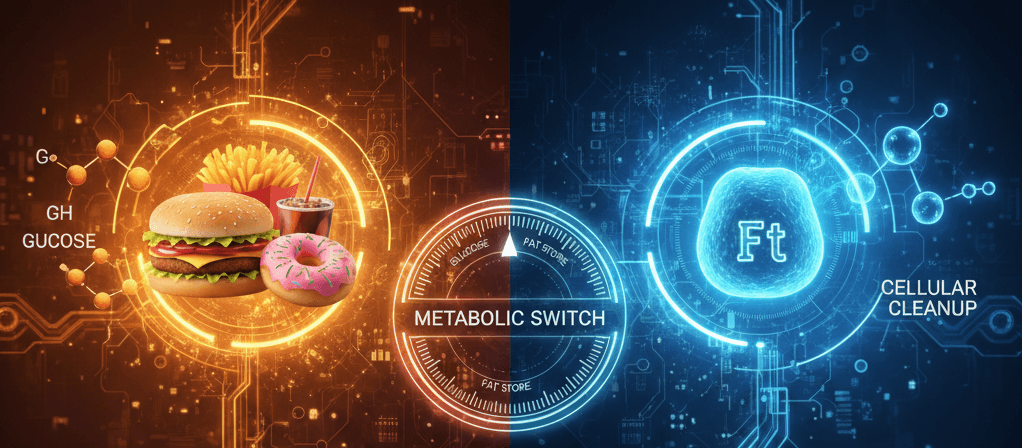
In a world of 24/7 convenience, our bodies rarely leave the "fed" state. We are constantly processing, storing, and fueled by a steady stream of glucose. However, modern science is rediscovering what our ancestors knew instinctively: there is profound healing power in the empty stomach. Periodic fasting isn't just about cutting calories; it’s about metabolic switching. It’s the process of flipping the body's internal switch from burning sugar to burning fat and cellular debris.
The Cellular Cleanup: Autophagy
Think of your cells like a kitchen. If you cook 24/7, the dishes pile up and the counters get greasy. Autophagy is your body’s internal cleaning crew. When you fast for extended periods, your cells begin to break down and recycle damaged proteins and old components.
- The Benefit: This "cellular spring cleaning" is linked to a reduced risk of neurodegenerative diseases and improved cellular resilience.
Metabolic Flexibility & Insulin Sensitivity
Many of us are "sugar burners," reliant on the next meal to avoid a "hangry" crash. Periodic fasting trains the body to become metabolically flexible. By depleting glycogen stores, you force your system to access stored body fat for energy.
- The Benefit: This improves insulin sensitivity, lowering the risk of Type 2 diabetes and stabilizing energy levels throughout the day without the post-lunch slump.
Boosting Brain Health
Fasting triggers the production of Brain-Derived Neurotrophic Factor (BDNF). Think of BDNF as "Miracle-Gro" for your brain. It supports the survival of existing neurons and encourages the growth of new ones.
- The Benefit: Improved focus, mental clarity, and long-term protection against cognitive decline.
Systemic Inflammation Reduction
Chronic inflammation is the silent driver behind most modern "lifestyle" diseases, from heart disease to arthritis. Studies show that periodic fasting can significantly lower markers of oxidative stress and inflammation in the body.
Finding Your Window
Fasting isn't one-size-fits-all. The "best" protocol is the one you can maintain consistently:
- 16:8 Method: Fasting for 16 hours and eating during an 8-hour window.
- 5:2 Method: Eating normally for 5 days and restricting calories for 2 non-consecutive days.
- 24-Hour Fast: A once-weekly or once-monthly "reset."
The Bottom Line
Periodic fasting is less about what you eat and more about when you eat. By giving your digestive system a break, you allow your body to divert energy toward repair, protection, and optimization.