
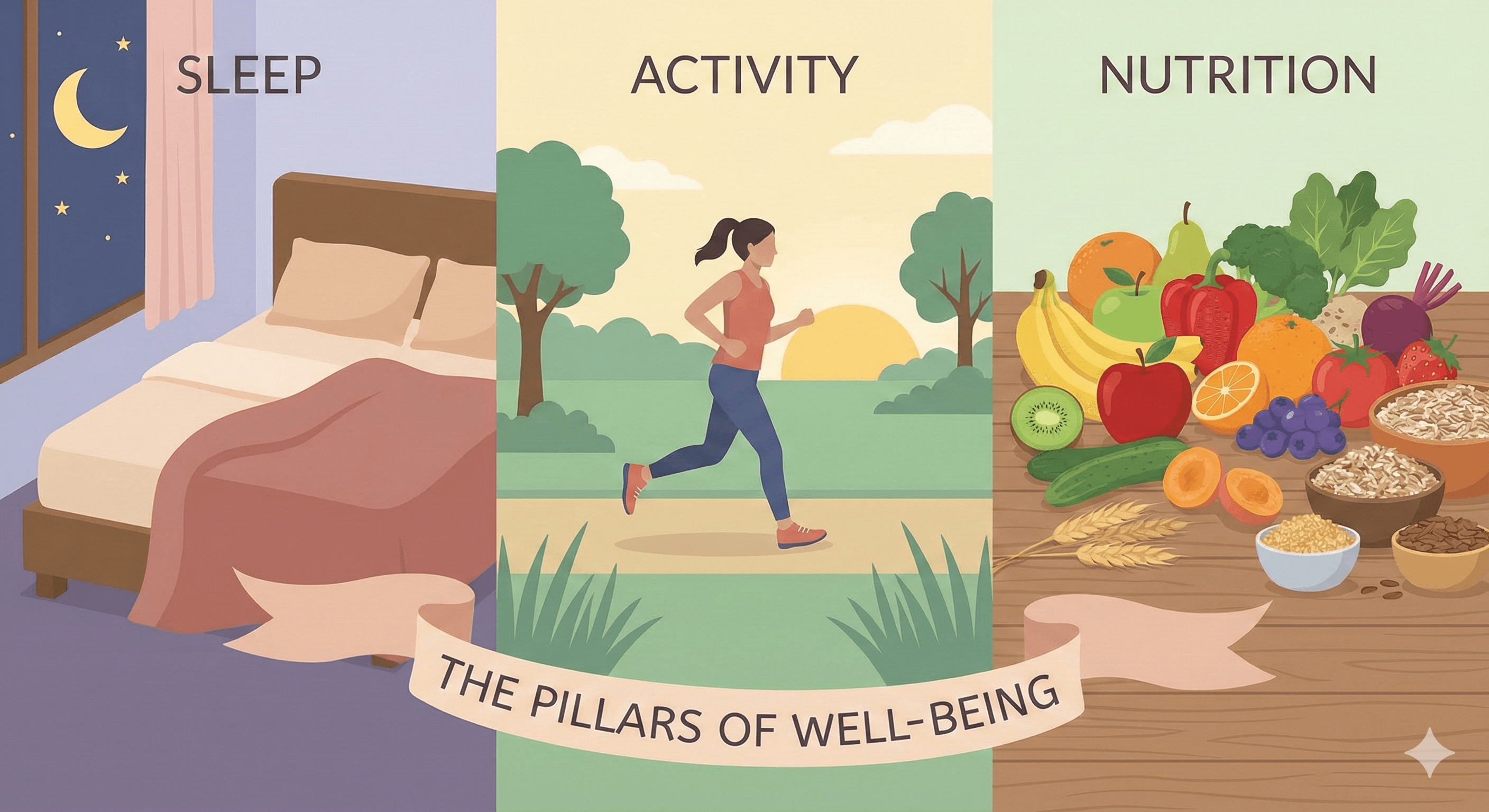
A combined improvement associated with 4.0 additional years of healthspan includes:
Sleep:
An additional 24 minutes per day.
Physical Activity:
An additional 3.7 minutes per day of moderate-to-vigorous physical activity (MVPA).
Nutrition:
A 23-point increase in the Diet Quality Score (DQS). Practical examples for achieving this 23-point dietary improvement include adding one cup of vegetables per day, one serving of whole grains per day, and two servings of fish per week.
Key Insights on Behavioral Minimums
Synergy vs. Isolation:
While individual behaviors require substantial "doses" to improve healthspan in isolation, the combined dose needed for meaningful improvement is substantially lower due to the synergistic relationship between sleep, activity, and nutrition (SPAN). For instance, achieving 8 additional years free of chronic disease required 30 min/day of MVPA in isolation, but only 10 min/day when combined with improved sleep (65 additional mins/day) and diet (61 additional DQS points).
The "Optimal" Threshold:
While the minimums above grant 4 years, those who reached the "optimal" levels (7.2–8.0 hours of sleep, >42 min/day of MVPA, and a DQS of 57.5–72.5) saw a healthspan extension of 9.45 years compared to those with the least favorable habits.
MVPA as a Primary Driver:
Moderate-to-vigorous physical activity appeared to be the primary contributor to gains in both lifespan and healthspan. Improvements in healthspan became statistically significant once individuals entered the moderate MVPA category of more than 22 minutes per day, regardless of their sleep or diet levels.
Plateaus and Limits:
For healthspan, the benefits of MVPA were found to plateau at approximately 75 minutes per day, which was associated with 10 additional years. Conversely, sleep duration showed a maximum benefit at 8 hours per day, but these improvements were nullified if sleep duration exceeded 8.5 hours.
Conclusion: Small, concurrent changes offer a powerful and feasible public health opportunity because they are more behaviorally sustainable than making large changes to a single habit